+48 600 888 887

Useful information about amber
Amber (the international term is succinite) is the hardened resin of trees that grew about 45-50 million years ago. Climate change caused the sap from the trees to flow profusely. The resin oxidized and became covered by a thick, dark brown crust and thus accumulated in the soil.
Rivers and streams gradually washed the hard crust of resin from the soil and carried it into the rivers, seas and oceans.
About two million years ago, a huge glacier transported layers of soil, including amber deposits, to the foothills of the Carpathian Mountains, leading to the formation of today's amber deposits.
The age of amber fossils is determined according to the time to which the rock with the amber layer found belongs. An important role is played by other accompanying finds found next to the amber inclusions, the time of which is known to professionals.
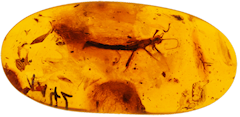
Inclusions – the term used to refer to parts of ancient plants, animals, or insects that are up to 40 million years old. Resin from trees falling to the ground became a trap for plant particles and tiny creatures, keeping them intact. Nowadays, amber with inclusions is of particular interest to researchers and scientists, because they preserve the secrets and mysteries of the past.
Blue is the rarest shade of amber and the most valuable. There is less and less blue amber, this color has almost disappeared.
The color can vary from pale blue to cornflower.
The largest deposits of amber are located in the "Baltic-Dnieper Amber Province". Kaliningrad Oblast, Poland, Lithuania, and Right-Bank Ukraine provide about 98% of global amber supplies.
"Cloudy" and "bone" amber glow milky white with a faint blue tint. Raw amber with a so-called sugar crust luminesces in brown tones. Synthetic resin based on Bakelite is inert in ultraviolet rays, casein imitations glow yellow.
Natural amber is electrified when the fabric is rubbed. If you bring an electrified sample to finely chopped paper, fluff or feathers, they will be attracted. The method makes it possible to filter out, for example, copal, which is often sold under the guise of young amber, and other fakes that do not have the property of electrification.
In ancient times in China, amber was called "hutso" - the soul of a tiger. For centuries, the Chinese believed that after death, the tiger's soul falls into the earth and turns into amber there.
Only members of the ruling dynasty could wear amber jewelry.
Looking for a reliable supplier?
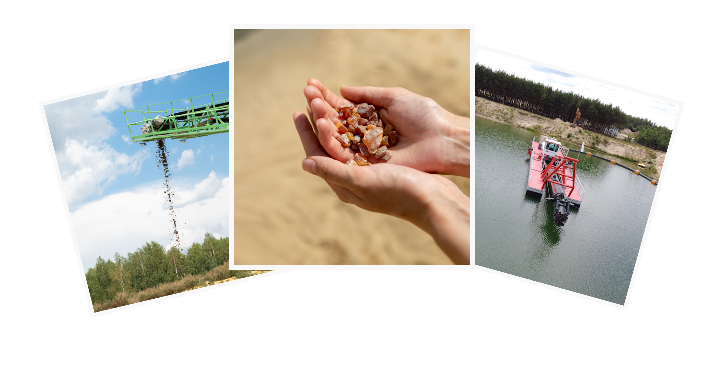
Our company extracts amber, glauconite and sand at a licensed deposit in Poland using modern equipment.
You can be sure that you will receive on-time deliveries in accordance with the specification.